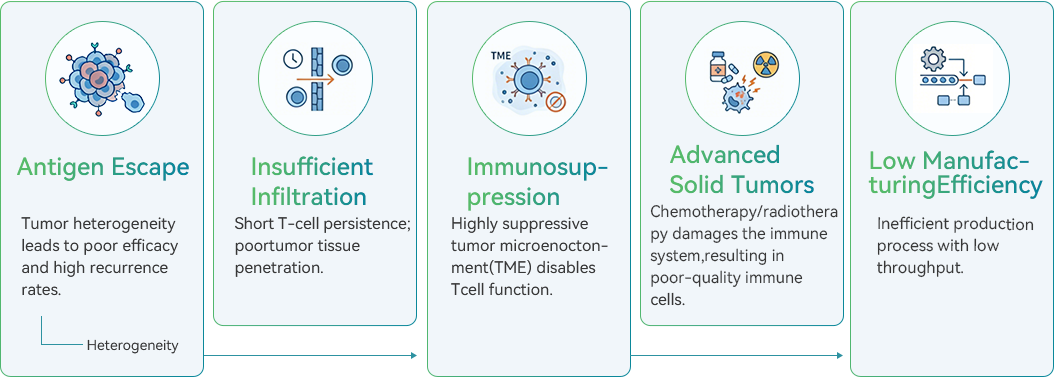
Lung cancer and relapsed/refractory (R/R) multiple myeloma, classified as solid tumor and hematological malignancy respectively, confront identical core clinical challenges: delayed early diagnosis, high tumor heterogeneity, drug resistance and disease relapse, insufficient therapeutic accessibility, and complicated long-term patient management. Novel modalities like CAR-T cell therapy are therefore in critical demand, as they can precisely eradicate malignant cells and reconstruct anti-tumor immunity.
Nevertheless, traditional ex vivo CAR-T products have inherent drawbacks: extended customized manufacturing cycles, prohibitive production costs, inconsistent batch quality, and severe side effects including cytokine release syndrome (CRS) and neurotoxicity. Restricted by the immunosuppressive tumor microenvironment and antigen escape, such therapies deliver suboptimal efficacy and low durable remission rates against solid tumors, posing major obstacles to large-scale commercialization.
By contrast, in vivo CAR-T development is hindered mainly by weak delivery system tropism, unstable transfection efficiency and high vector immunogenicity. It is hard to strike a balance between CAR expression persistence and treatment safety. Furthermore, real-time monitoring of in vivo cell viability and drug biodistribution cannot be achieved, raising substantial difficulties in risk assessment and quality control.
Both ex vivo and in vivo CAR-T technologies share pervasive industry-wide pain points, including limited therapeutic performance in solid tumors, T cell exhaustion, antigen loss, and poor clinical accessibility.
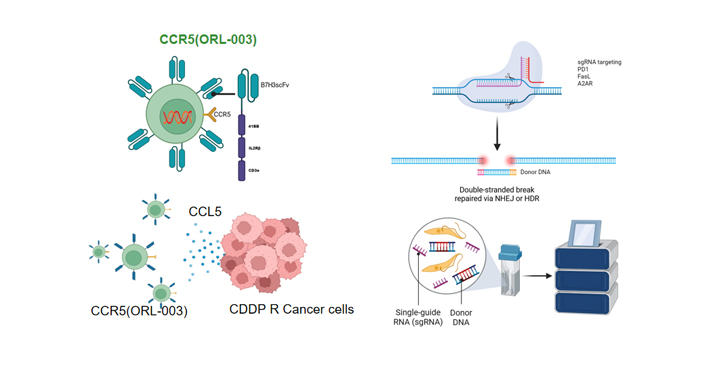
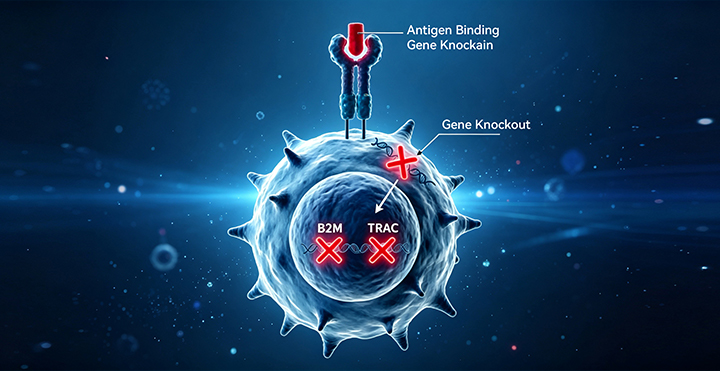
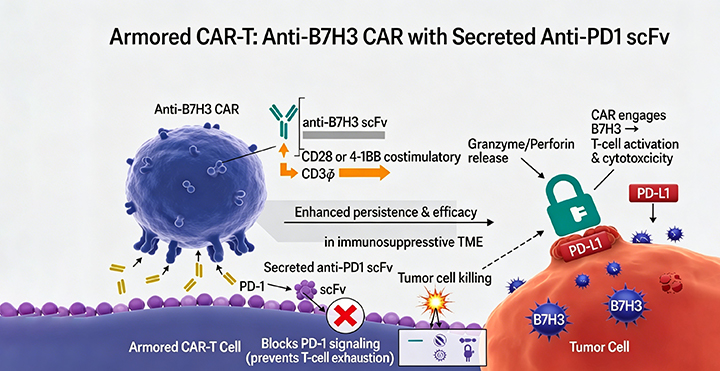
Orchid Therapeutics Ltd. leverages proprietary innovative platforms and diversified technical strategies — universal off-the-shelf CAR-T, dual-target CAR constructs, armored CAR-T, gene editing, and targeted in vivo CAR systems — to tackle the above bottlenecks one by one. We strive to accelerate the clinical translation of next-generation cell therapies and fulfill our vision of accessible curative treatments for patients.

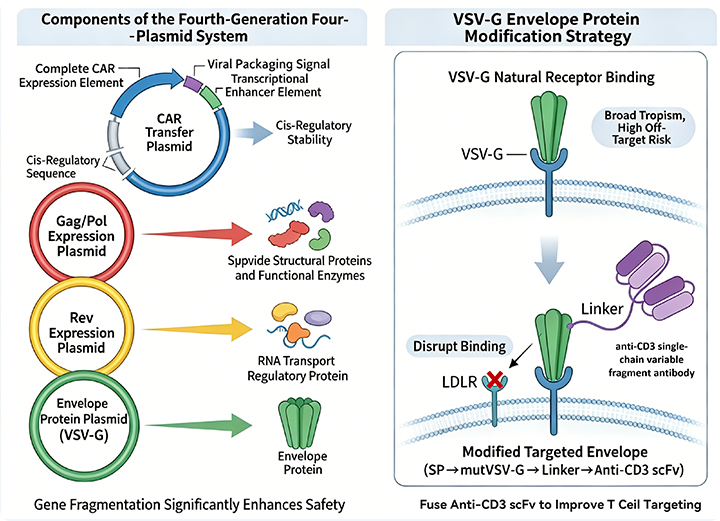
The fourth-generation four-plasmid lentiviral system is a high-safety vector platform widely applied to in vivo CAR-T development. It consists of four core components: CAR transfer plasmid, Gag/Pol expression plasmid, Rev expression plasmid, and envelope glycoprotein plasmid.
The transfer plasmid carries complete CAR expression cassettes, viral packaging signals, transcriptional enhancers and cis-regulatory sequences, which deliver and drive CAR gene expression in target cells. The other three helper plasmids separately provide structural proteins, functional enzymes, RNA transport regulatory proteins and VSV-G envelope protein required for viral assembly. Since essential viral genes are split into separate plasmids, the risk of replication-competent virus (RCV) is greatly reduced, with overall biosafety remarkably improved.
Native VSV-G enables membrane fusion with target cells by binding to low-density lipoprotein receptor (LDL-R), which is ubiquitously expressed in human bodies. Such broad viral tropism causes considerable off-target risks. To tackle this problem, we conduct site-directed point mutations on VSV-G to disrupt its binding affinity with LDL-R. Meanwhile, we fuse T-cell-targeted single-chain antibodies to the extracellular C-terminus of VSV-G to enhance viral specificity toward T cells.
Virus Manufacturing Process
In R&D and clinical production, four plasmids are co-transfected into 293T packaging cells at an optimal ratio to support sequential viral transcription, assembly and budding. Virus-containing cell supernatant is harvested and processed via filtration, concentration, purification and titer quantification, so as to generate high-purity clinical-grade lentiviral products.
In Vivo Mechanism of Action
After direct in vivo infusion, the engineered targeted envelope specifically recognizes and binds T lymphocytes in peripheral blood and tissues. Viral genomic RNA is released via endocytosis and membrane fusion, followed by reverse transcription into double-stranded DNA that integrates into the genome of host T cells. CAR genes are then continuously transcribed and translated. This process reprograms patients’ endogenous T cells into functional CAR-T cells in situ, which further recognize and eliminate tumor cells precisely via CAR-mediated targeted cytotoxicity.





Copyright © 2026 Orchid Therapeutics Co., Ltd. all rights reserved